The Perfect Chair: A Study in Form and Comfort
Few designs embody both sculptural presence and everyday function as gracefully as Hans Wegner’s Wishbone Chair. Its curved backrest and woven seat achieve a rare harmony: light in structure, yet generous in comfort.
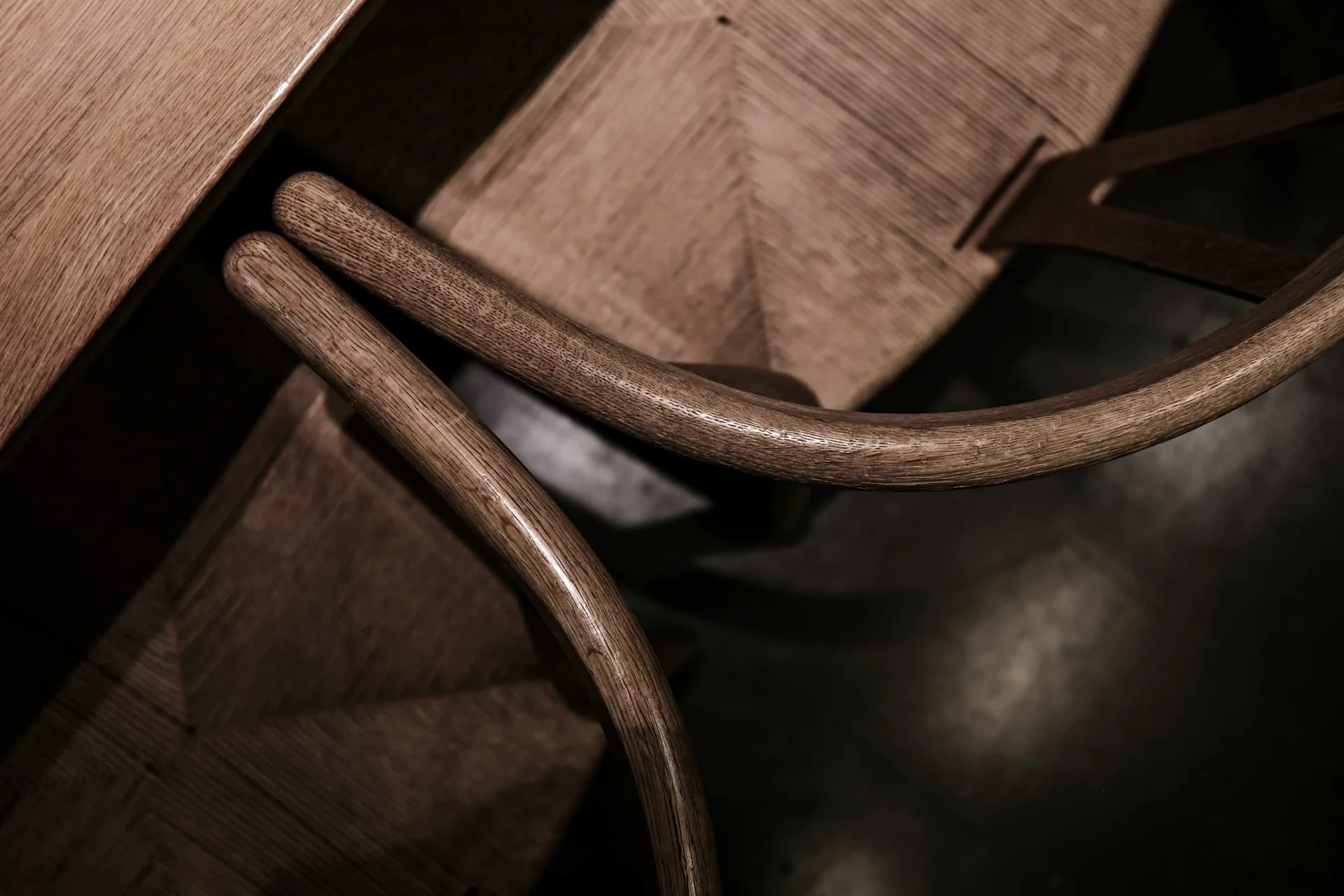
There are countless chairs in the world, yet very few deserve the title of perfect. Hans Wegner’s Wishbone Chair – designed in 1949 and still in production today – is one of them. It is neither flashy nor fragile, and yet it holds a quiet authority in any room it inhabits.
The Wishbone Chair teaches us that design is not about more, but about enough.
The Balance of Form and Function
At first glance, the Wishbone Chair is remarkably simple: a curved wooden back, a woven paper-cord seat, and four elegantly tapered legs. But its simplicity is deceptive. The geometry of the “Y” shaped backrest offers just enough support while allowing air and light to pass through. The gently rounded armrests invite touch without weighing down the design.
This is the magic of Wegner’s approach: every curve has a reason, every joint a purpose. Nothing is arbitrary, and yet nothing feels overthought.
Craft in the Details
The Wishbone Chair is not mass-produced in the disposable sense. Each chair requires skilled craftsmanship, with the seat alone taking hours to hand weave. The wood is bent and joined with precision so that no single piece dominates the others.
It is a reminder that craft is not ornament – it is structure. The strength of the chair comes from the care with which it is made, not from excess material.
Comfort Without Compromise
Despite its slender frame, the Wishbone Chair is surprisingly comfortable. The seat gives slightly under weight, while the open back allows freedom of movement. It does not insist on one posture, but supports many – upright for dining, relaxed for conversation, contemplative for reading.
This versatility is why the chair works as well at a simple kitchen table as it does in a gallery or library. It adapts without ever losing its identity.
Quality Over Quantity
In a world where furniture is often designed to be cheap, fast, and disposable, the Wishbone Chair feels almost radical. It is an object that asks for investment – not only financial, but emotional. You buy it once, and it stays with you for decades.
To own fewer things of greater quality is not nostalgia – it is a form of progress.
This does not mean clinging to the past or fetishizing mid-century icons. It means acknowledging that durability, beauty, and comfort are values worth preserving in the present.
A Lesson for Everyday Living
The Wishbone Chair is not a relic, but a reminder. It shows us that everyday objects – a chair, a table, a light – can embody care and thoughtfulness without shouting for attention.
Hans Wegner once said he wanted to design chairs that were “as simple and genuine as possible.” The Wishbone Chair fulfills that ambition. It is proof that good design can be approachable, enduring, and quietly transformative.
Perfection in design is not the absence of flaws, but the presence of balance.
