Corners Worth Remembering
Architecture often reveals itself in its margins – in the corners where walls meet, or in thresholds that signal entry. These quiet details hold the power to shape how we move, pause, and inhabit space.
Most people rarely notice corners. We pass through them, stack books against them, or let dust gather in them. Yet for designers and architects, corners are not afterthoughts – they are moments where space, structure, and experience converge.
A corner is never just geometry – it is an invitation to pause, turn, or begin.
The Meeting of Surfaces
At its simplest, a corner is where two surfaces meet. But this meeting carries enormous weight: sharp, right-angled corners project precision; softened edges suggest warmth; recessed junctions create shadow and depth.
Corners as Transitions
Corners are thresholds that guide us – they mark the point where one space ends and another begins. Whether it is the darkened edge of a Japanese tea house alcove or the sunlit corner of a Parisian café, these junctions influence how we move, pause, or linger.
Corners as Characters
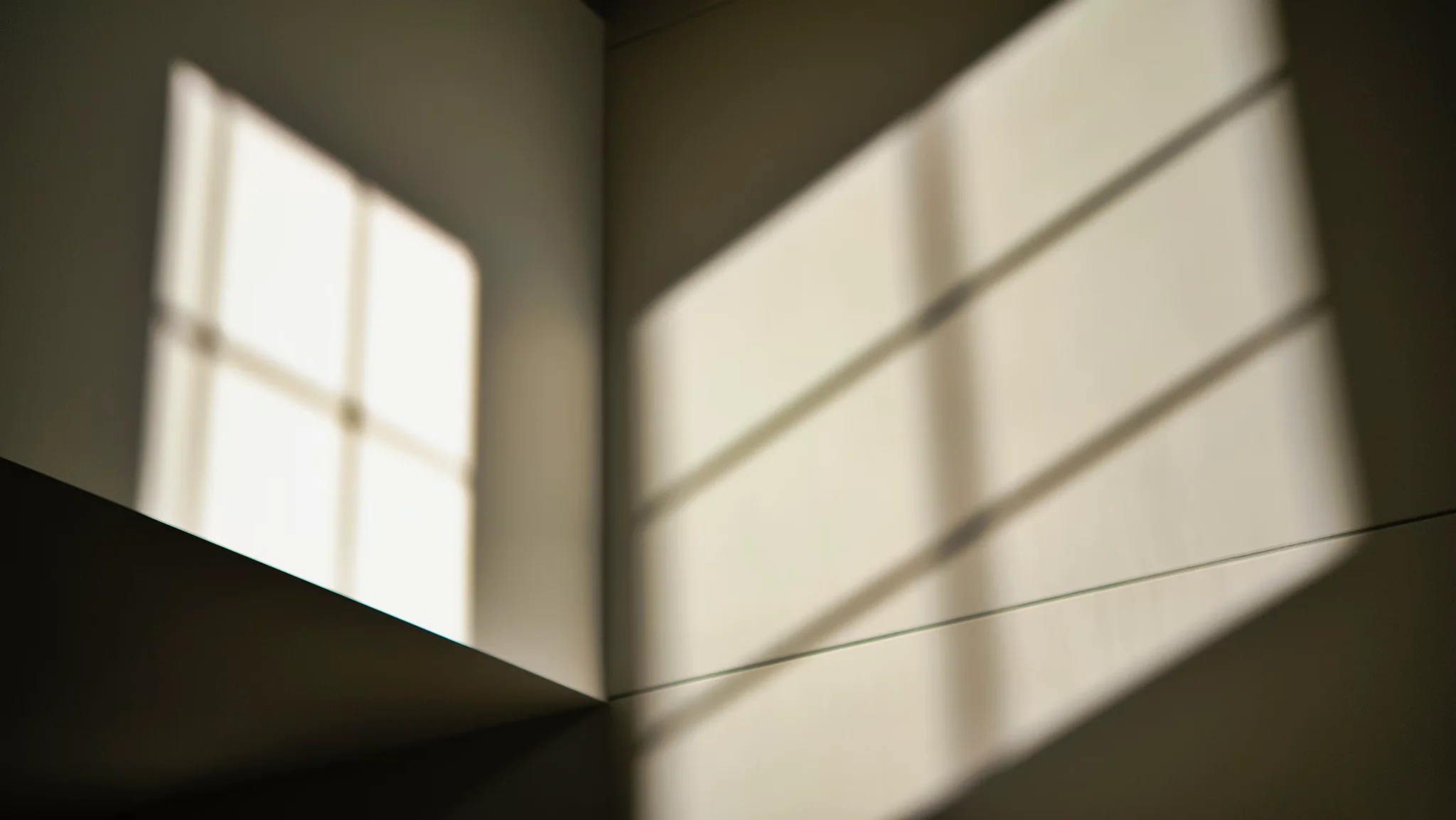
The most memorable interiors are often defined by their corners, not their centers.
Corners remind us that design is not only about what we see, but about how space makes us feel.
Craft in the Smallest Places
Corners reveal the honesty of construction. A well-joined wooden cabinet corner tells of a maker’s skill; a chipped plaster edge speaks of time and use. We may not consciously register these details, but we sense them. Quality lingers in the periphery.
The Invitation to Look Closer
To remember a corner is to pay attention. It is a practice in slowing down – in acknowledging that even the quietest parts of our environments carry meaning.
Hans van der Laan, the Dutch architect, once said that “architecture is about creating meaningful space, not just useful space.” Corners, with their modest presence, embody this principle.
Sometimes, the smallest angles contain the deepest stories.
